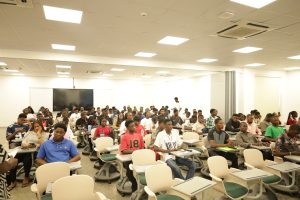


 The Deputy Vice-Chancellor of Wigwe University, Professor Chinyere Ukaga, has outlined the institution’s academic programmes, curriculum structure and credit system to members of the 2026 freshmen class, urging the new students to approach their university journey with commitment, discipline and courage.
Speaking during the freshmen orientation programme, Professor Ukaga said that most programmes run for four years, covering a minimum of eight and a maximum of 12 semesters, while Engineering programmes require five years, or between 10 and 14 semesters, in line with the National Universities Commission’s Core Curriculum and Minimum Academic Standards (CCMAS). The university operates a semester-based calendar consisting of two 18-week semesters each academic year, with one week for registration, 15 weeks of lectures and two weeks for examinations. Students are expected to engage in lectures, laboratory and experimental activities within the university’s structured instructional timetable.
According to the Deputy Vice-Chancellor, Wigwe University’s credit system recognizes one credit unit as one hour of lecture or tutorial per week throughout a semester, with equivalent provisions for seminars, laboratory or field work, practicum, studio practice, teaching practice and industrial attachment. “Courses are classified as Core, Required or Elective, while course codes consist of a three-letter departmental abbreviation and a three-digit number, with odd numbers generally assigned to first-semester courses and even numbers to second-semester courses,” she added.
Professor Ukaga further told the freshmen that graduation requires at least 120 credit units in a four-year programme and 150 units in a five-year programme, alongside a minimum grade of C in all courses and a cumulative GPA of 2.0 in university, core and major subjects. Students must also satisfy departmental requirements, complete prescribed seminars, SIWES and final-year projects, and demonstrate good character. She stressed that at least 75 per cent attendance is required to qualify for examinations, while plagiarism, cheating and collusion are prohibited. Students were encouraged to be attentive, punctual, respectful, truthful and effective as they begin their academic careers at the university.